
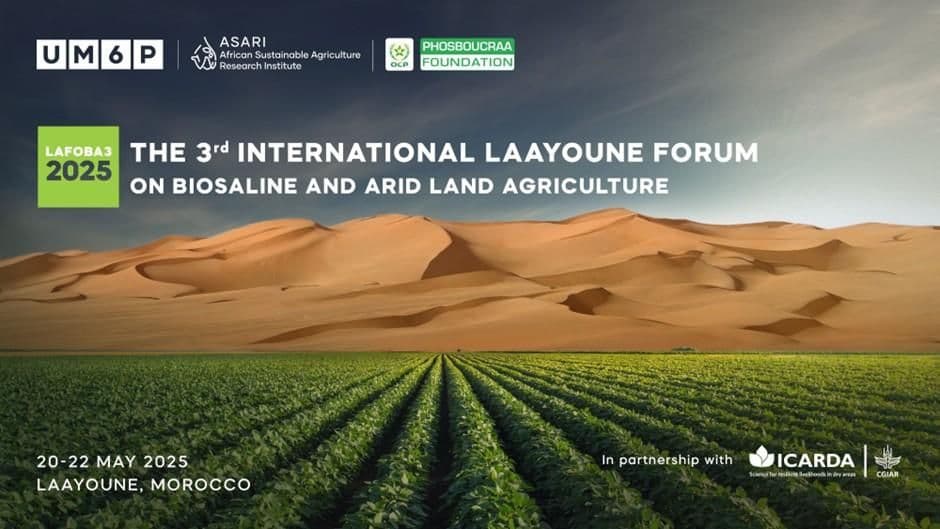
The 3rd International Laâyoune Forum on Biosaline and Arid Agriculture (LAFOBA3)
May 20 to 23, 2025, saw the Third International Laayoune Forum on Biosaline and Arid Land Agriculture (LAFOBA3) at UM6P’s African Sustainable Agriculture Research Institute (ASARI), bringing together over 200 experts and researchers from around the globe to discuss the pressing needs of drought, climate change, and soil and water salinization in arid and semi-arid regions. Organized in collaboration with The Phosboucraa Foundation and the International Center for Agricultural Research in the Dry Areas (ICARDA), the forum featured 17 keynote addresses, 125 oral presentations, and 35 poster presentations across 11 thematic sessions. These spanned such diverse disciplines as soil science, plant breeding, water management, and climate resilience, reflective of the essentially multidisciplinary character of biosaline and dryland agriculture. Most prominently, the conference evoked focus on pioneering scientific advancements and new-age technologies for enhancing the productivity and sustainability of salinity and drought-stressed smallholder farming systems. This is in line with fresh evidence indicating that arid and semi-arid environments are disproportionately vulnerable to drought-initiated declines in forage and crop production, the urgency required having been necessitated by instituting adaptive management strategies that conjoin soil-plant-microbe interactions and salt tolerance mechanisms to strengthen ecosystem resilience.
Along with scientific exchange, LAFOBA3 served as a central platform for evaluating progress on drought and salinity policy frameworks at national, regional, and international levels. The forum created a platform for problem discussion and resolution with policymakers, farmers, and research scientists to foster collaborative solutions to the interlocked dynamics of climate variability, soil degradation, and water limitation. The emphasis on comprehensive strategies—combining genetic improvement of salt tolerance, precision water management, and conservation agriculture practices—is in line with contemporary scientific view for reducing climate change impacts on dryland agriculture. For instance, advances in next-generation sequencing and transcription factor research have identified major genes that regulate plant salt stress tolerance, which present possible avenues for developing salt-resistant crop cultivars. By integrating groundbreaking research with policy and management innovations that are pragmatic, LAFOBA3 reaffirmed the necessity of whole-of-system evidence-based interventions in safeguarding food security and ecosystem integrity in highly susceptible biosaline and arid environments.
Search
Latest Posts
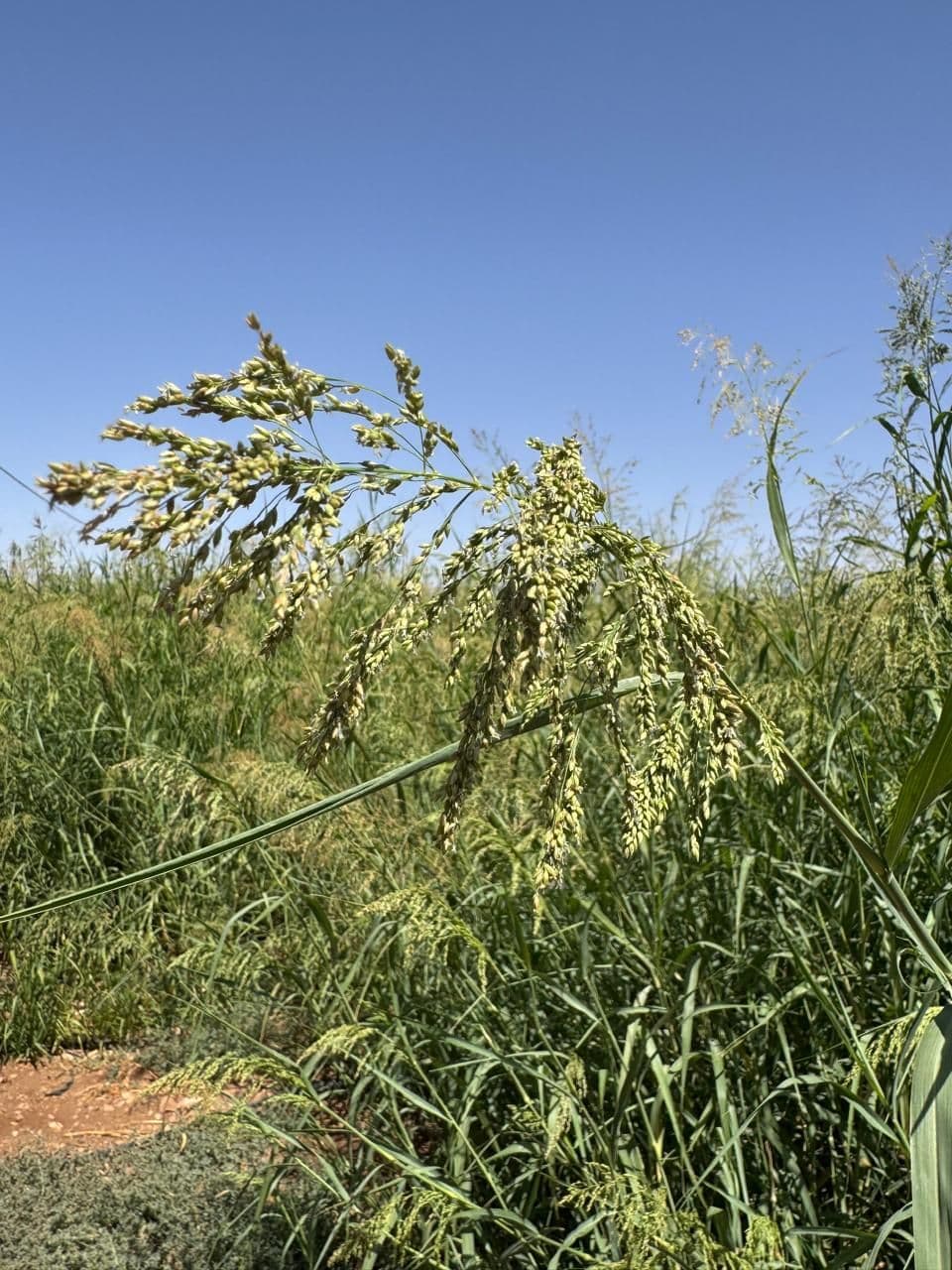
Blue Panicum, a catalyst for sustainable forage sovereignty
10 December 2025
International Camelid Conference
10 December 2025
The 3rd International Laâyoune Forum on Biosaline and Arid Agriculture (LAFOBA3)
10 December 2025
The Second International Forum on Biosaline Agriculture (LAFOBA2)
10 December 2025