
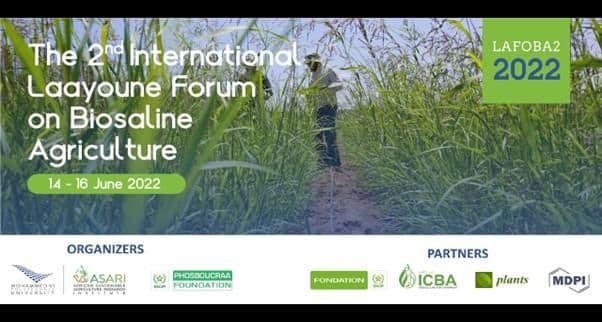
The Second International Forum on Biosaline Agriculture (LAFOBA2)
The Second International Laayoune Forum on Biosaline Agriculture (LAFOBA2) was held from June 14 to 16 in 2022.. This e-conference was organized jointly by the African Sustainable Agriculture Research Institute (ASARI), University Mohammed VI Polytechnic (UM6P) and Phosboucraa foundation in partnership with the OCP foundation and the International Center for Biosaline Agriculture (ICBA). The Forum was organized in view of enormous impact soil and water salinization has on ecosystems, agriculture, livelihoods and food security worldwide. It is important to clearly map the areas already affected by salinity or at risk on a global scale and develop and implement strategies and practices to effectively and efficiently address these effects. The forum was also a continuation of the previous successful First International Laayoune Forum on Biosaline Agriculture, as salinity still affects many aspects of human life and the concept for the use of saline water for irrigation to increase food production has been advocated by many research scientists, organizations, institutions and authorities for the last more than five decades.
The forum looked at the progress that has been made in salinity management at national, regional and global levels. As practice and policy on salinity management have been further advanced, the forum benefited from a wide range of stakeholders, including scientists, policymakers and experts. It served as a platform for exchange of knowledge on the latest advancements and work on salinity. Salinity management and effective use of saline soil and water resources for food, feed and biofuel production the overarching objective of the forum.
The forum addressed the following broad objectives:
- to share examples of successful strategies, policies, measures, projects, and case studies to adapt to and mitigate salinization around the world for current and future scenarios considering climate change
- to form linkages and partnerships between various national, regional, and international initiatives targeting salinization -to facilitate dialogue between policymakers, donors and development agencies, scientists and experts
- to develop joint proposals of action at national, African, and international levels
Search
Latest Posts
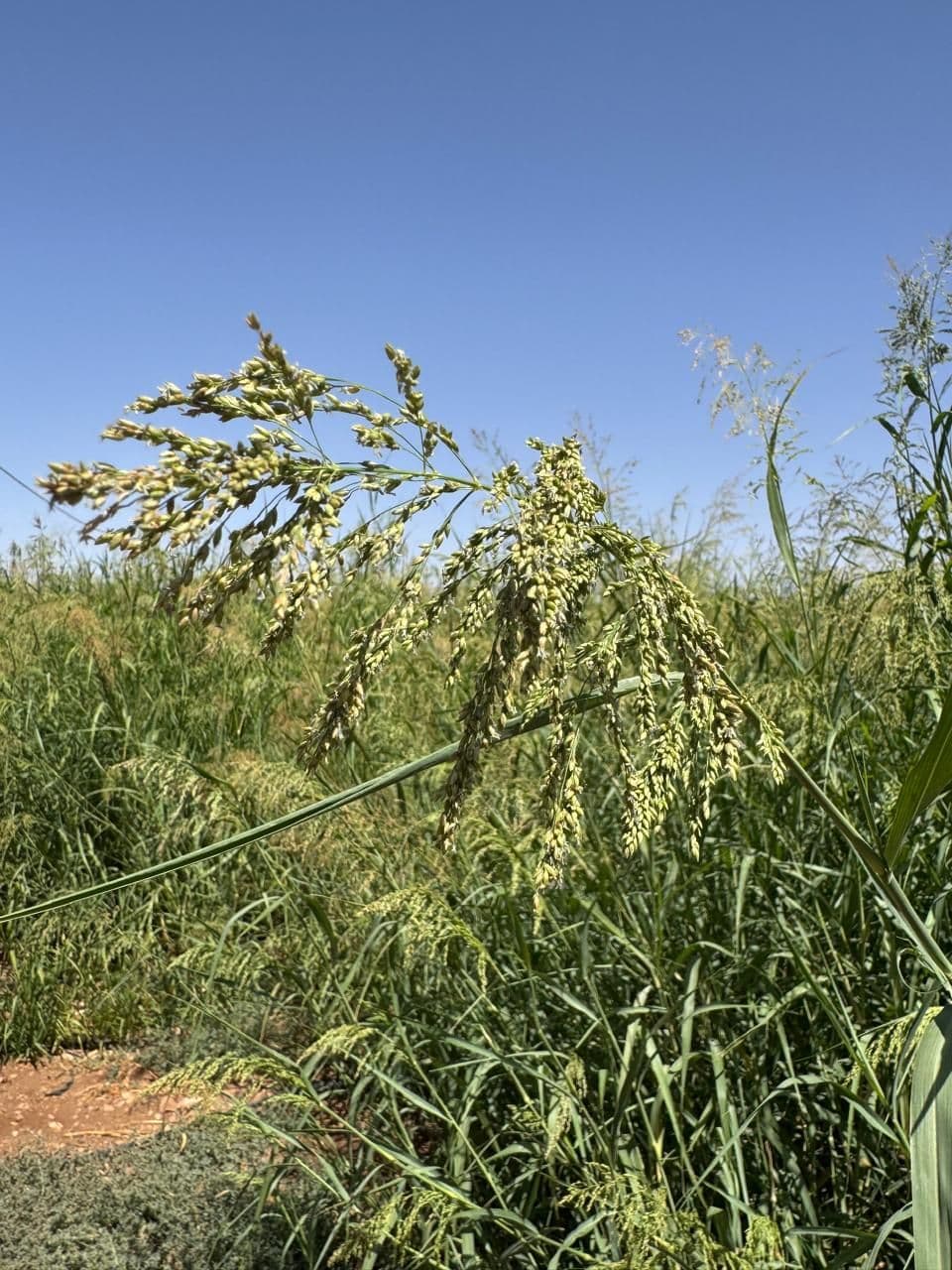
Blue Panicum, a catalyst for sustainable forage sovereignty
10 December 2025
International Camelid Conference
10 December 2025
The 3rd International Laâyoune Forum on Biosaline and Arid Agriculture (LAFOBA3)
10 December 2025
The Second International Forum on Biosaline Agriculture (LAFOBA2)
10 December 2025